For over 3 decades, FGASA has worked collaboratively with guides, employers, training providers, conservation bodies, and tourism stakeholders to define what professional guiding excellence looks like in practice. FGASA-certified guides are recognised for meeting—and exceeding—industry expectations, giving employers and guests confidence in their knowledge, experience, judgement, and conduct.
Professional Standards
To operate as a legal guide in South Africa, a guide needs to be registered with a provincial registrar and hold the relevant scope of competency aligned with the sector skills set ( Nature, Culture and/or Adventure) and guiding area, as reflected on their Tourist Guide Identification Card.
To obtain FGASA Professional status, guides are required to demonstrate depth of knowledge, practical skill, field experience, and ethical conduct. This ensures alignment with the safari tourism industry’s expectation of excellence and professionalism.
Professional Designations and Career Pathways
FGASA recognises guides who have demonstrated defined levels of professional skill, experience, and responsibility through Continuous Professional Development (CPD) and the awarding of Professional Designations. A FGASA Professional Designation is a title awarded to a guide in recognition of achieved competence and professional maturity. Designations provide both guides and employers with a clear and structured framework for career development.
FGASA has defined designation pathways across core nature guiding disciplines:
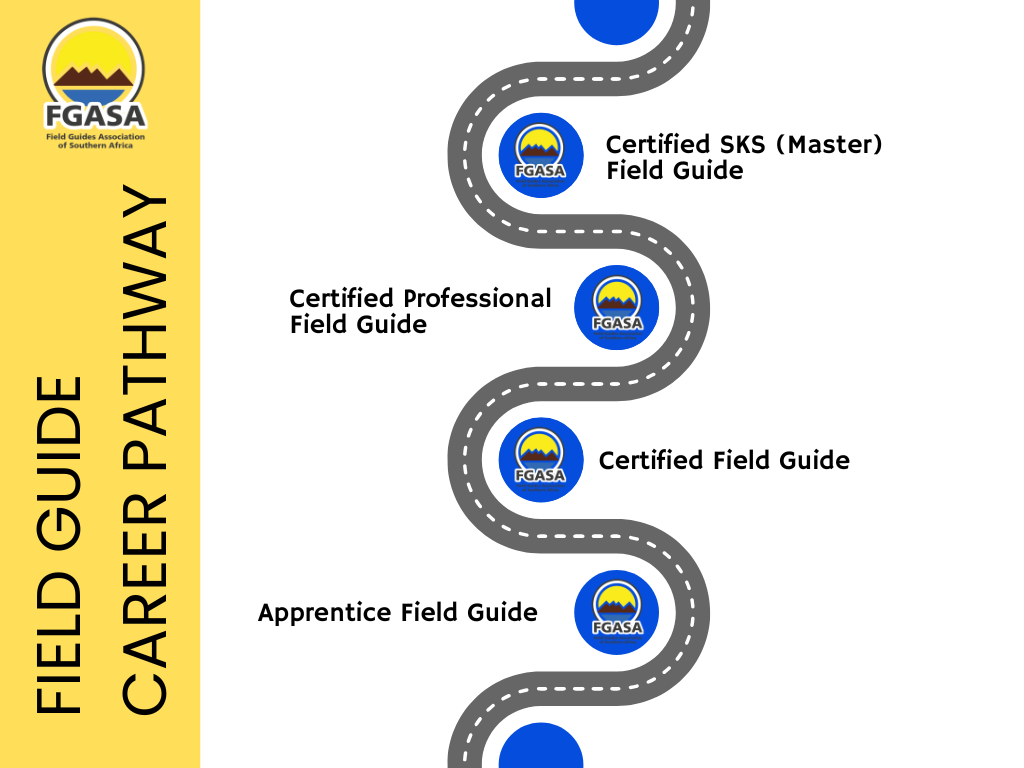
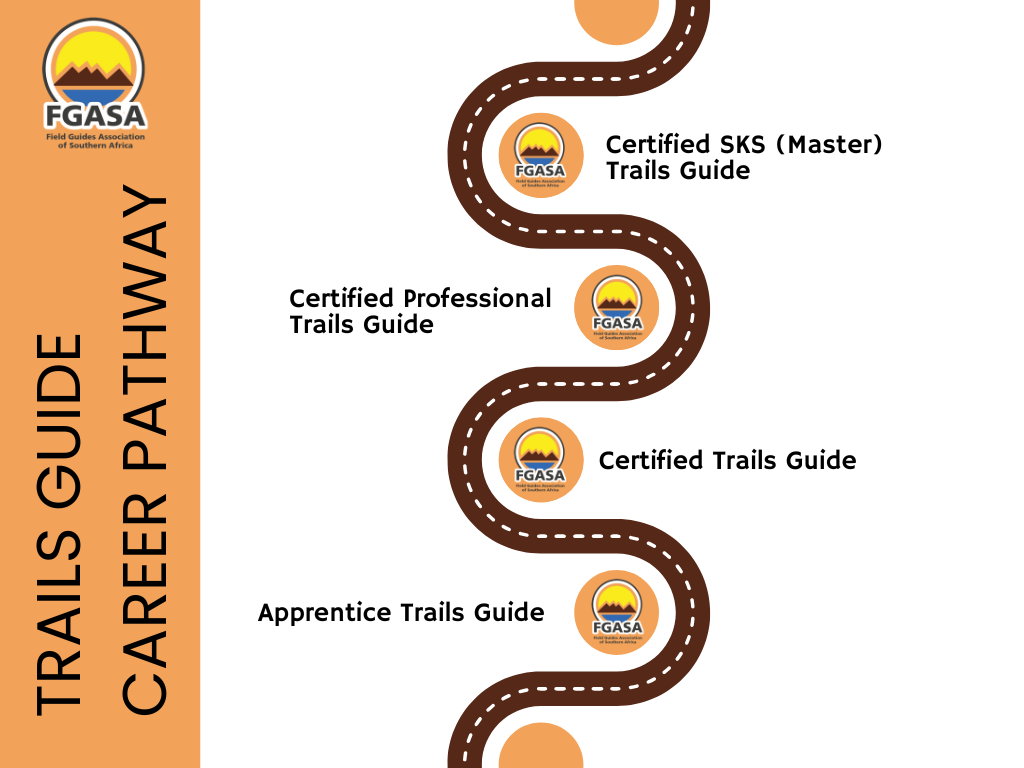
These pathways reflect increasing levels of experience, judgement, responsibility, and professional accountability within guiding teams.
How Professional Designations Support Employers
For employers, FGASA Professional Designations provide:
- A transparent indication of a guide’s assessed capability and experience level.
- Clarity around role suitability, responsibility, and progression within guiding teams.
- Support for risk management and safety, particularly in higher-responsibility guiding roles.
- A recognised framework for staff development, mentoring, and succession planning.
Professional Designations are supported by ongoing Continuing Professional Development, recognised specialisation skills, and bridging opportunities that promote access and growth within the profession.
Specialisation Skills
In addition to formal designation pathways, FGASA provides opportunities for guides to develop and demonstrate specialist knowledge and skills. These may include, but are not limited to: Astronomy, Lepidoptera, Tracking and Trailing, Marine Guiding.
The following will be introduced in due course … Interpretation Skills, Emotional Intelligence, Guiding Skills Development, Rock Art, Dangerous Animals Knowledge
These specialisations support depth of expertise and enhance the overall professional capability of guiding teams.
FGASA Certification
A FGASA certified Guide holds a professional status conferred by the Field Guides Association of Southern Africa through its internal governance processes. For employers and corporate members, it provides a voluntary and transparent professional reference point when engaging or supporting guides within their operations.
FGASA Certification does not replace statutory or regulatory requirements and is not a qualification. It is a recognition of competence and professionalism, time-bound, reviewed, and maintained through ongoing professional engagement and development.
What FGASA Certification Indicates
A FGASA certified guide has demonstrated that they:
- Meet professional standards informed by industry engagement and best practice.
- Have achieved current certifications relevant to their Designation.
- Participate in Continuous Professional Development (CPD) to improve skills set
- Maintain professional currency.
- Are bound by FGASA’s Code of Conduct.
Voluntary and Non-Exclusive Professional Alignment
Membership of FGASA is voluntary and is not a legal requirement to work as a guide. However, FGASA certification provides employers with assurance that they are engaging guides who operate at the highest level of professional excellence, who adhere to ethical standards, and who are motivated to continually improve their skills and knowledge.
The association will continue to engage constructively with members, employers, industry stakeholders and partners in support of safety, ethical practice, and long-term professional credibility within the guiding profession, in the best interest of guides.